04 / AUTONOMY

Autonomy and edge intelligence

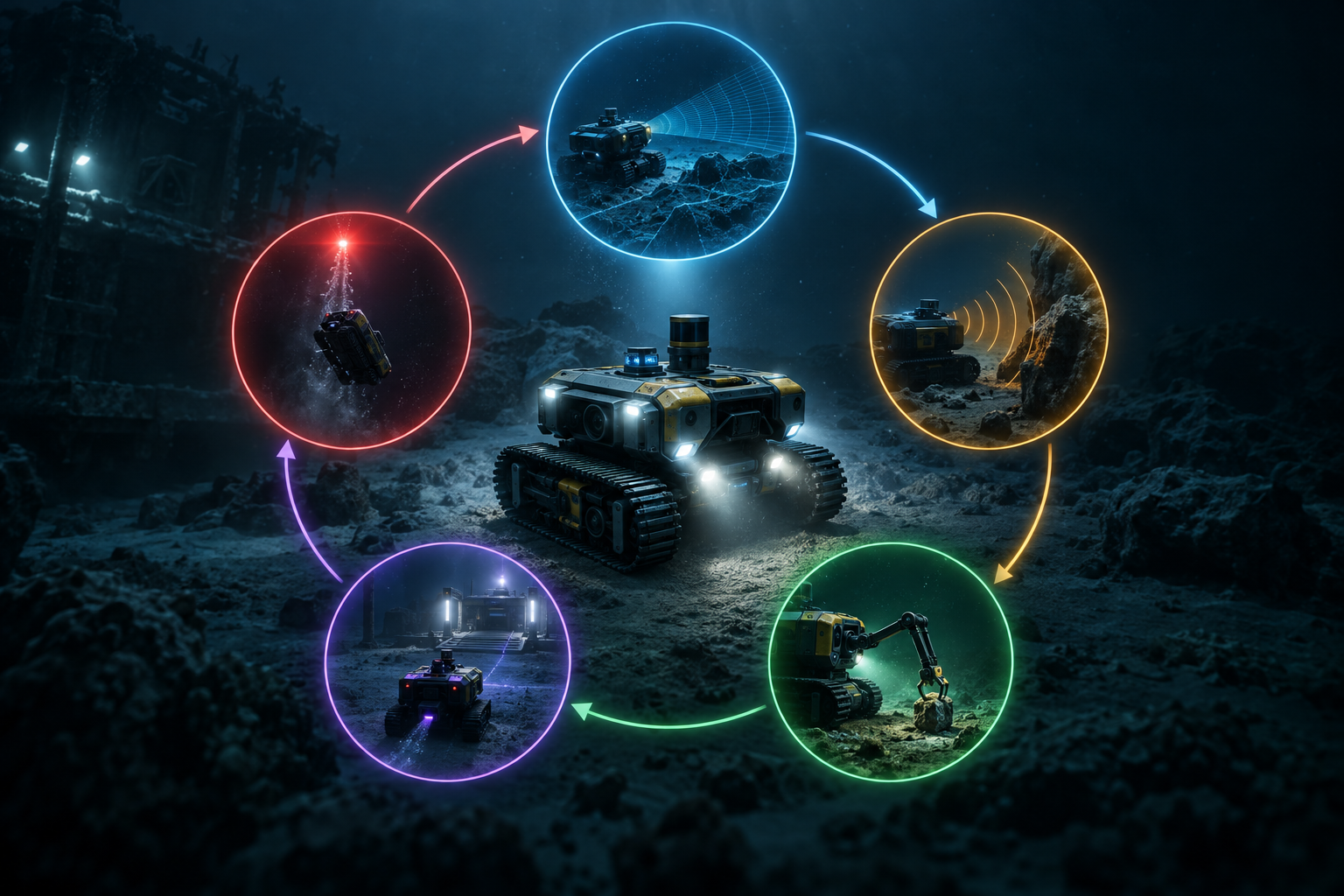
Autonomy is layered: a safety controller keeps the vehicle recoverable, while an edge computer interprets the scene and proposes the next action.

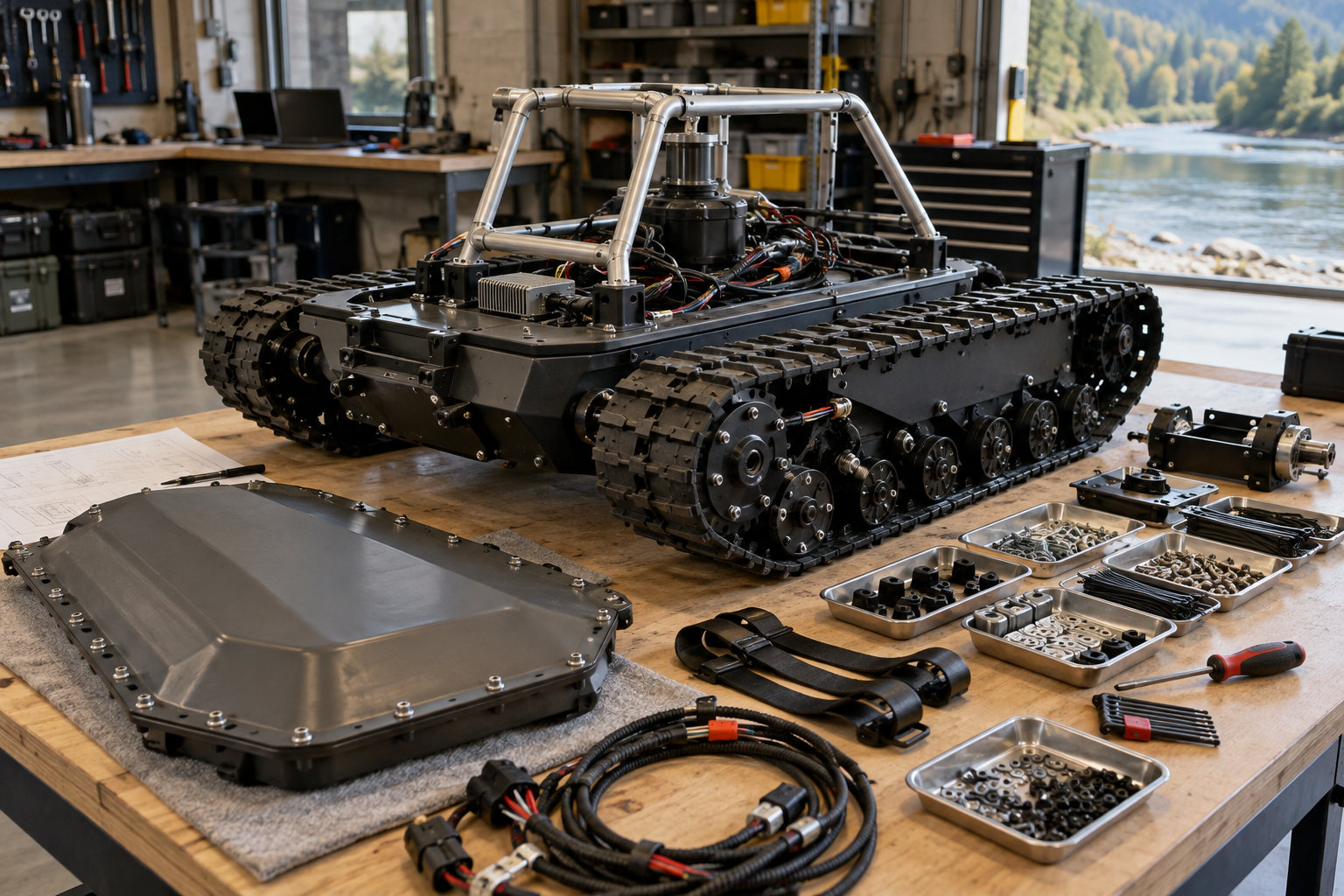
GoldRiverBot concept illustration

Compute pod

The research shortlist includes Jetson Orin NX (up to 100 TOPS in a 10–25 W class) and, for heavier experiments, AGX Orin Industrial (up to 275 TOPS). Those are candidate envelopes, not selected hardware. A Raspberry Pi 5 with a Hailo or Movidius accelerator is a lower-power alternative.

Primary candidate
Jetson Orin NX class
Power envelope
10–25 W class for NX
Runtime
ROS 2 nodes + hardware watchdog
Fallback
Safety MCU keeps propulsion and recovery safe
Models and state machine

YOLOv8/YOLOv10-style detection, Sea-thru or WaterGAN-inspired image correction, and multi-sensor fusion are research candidates. A deterministic state machine still owns the vehicle: launch, survey, avoid, sample, return, abort, and recover. A model may suggest a route; it never disables the abort path.

  • Unknown obstacle → slow, map, and choose a clearance path.
  • Leak, over-current, or tether fault → stop sampling and recover.
  • Low confidence → record and defer rather than invent a classification.
Models and state machine

Verification before river work

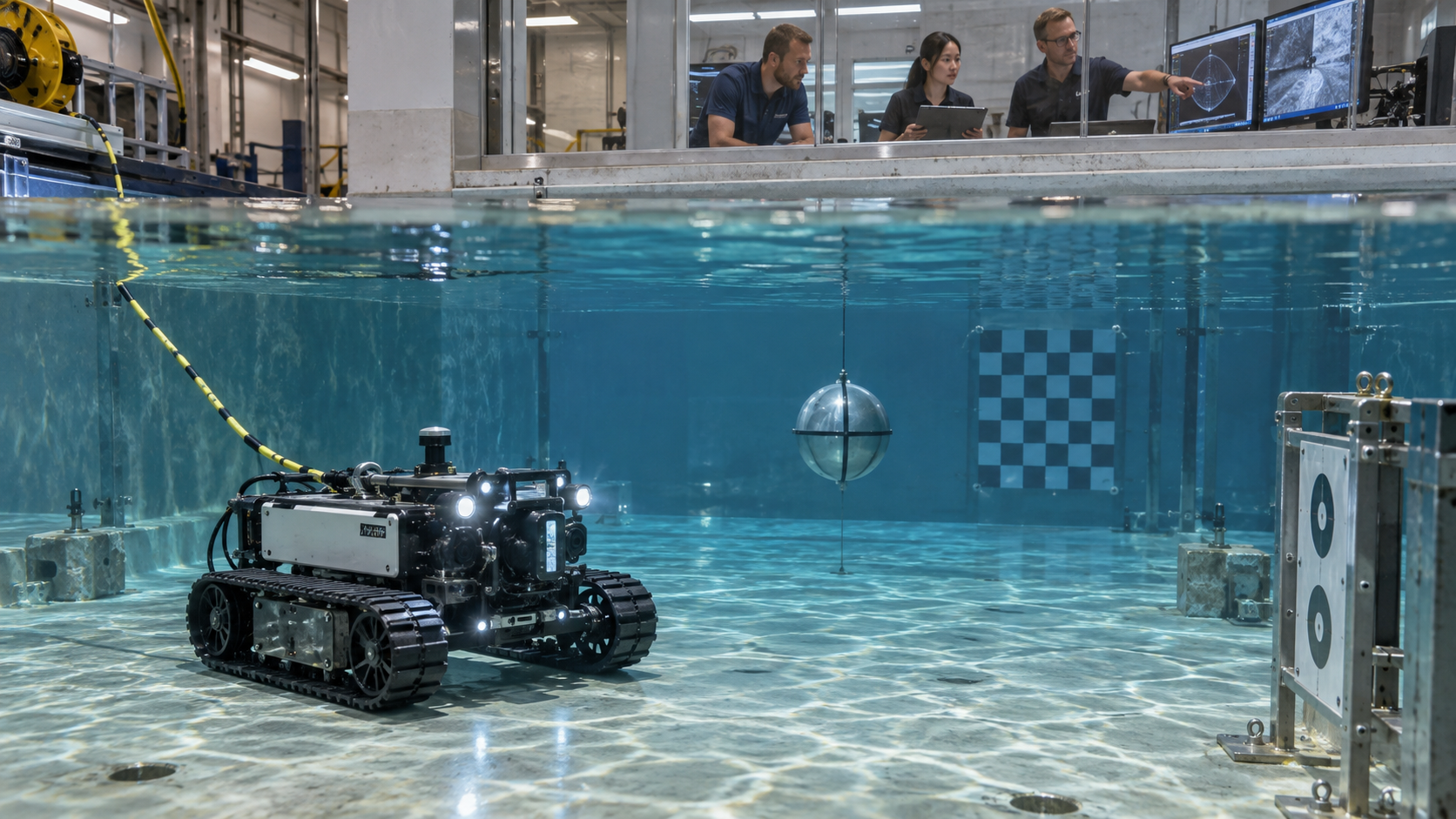
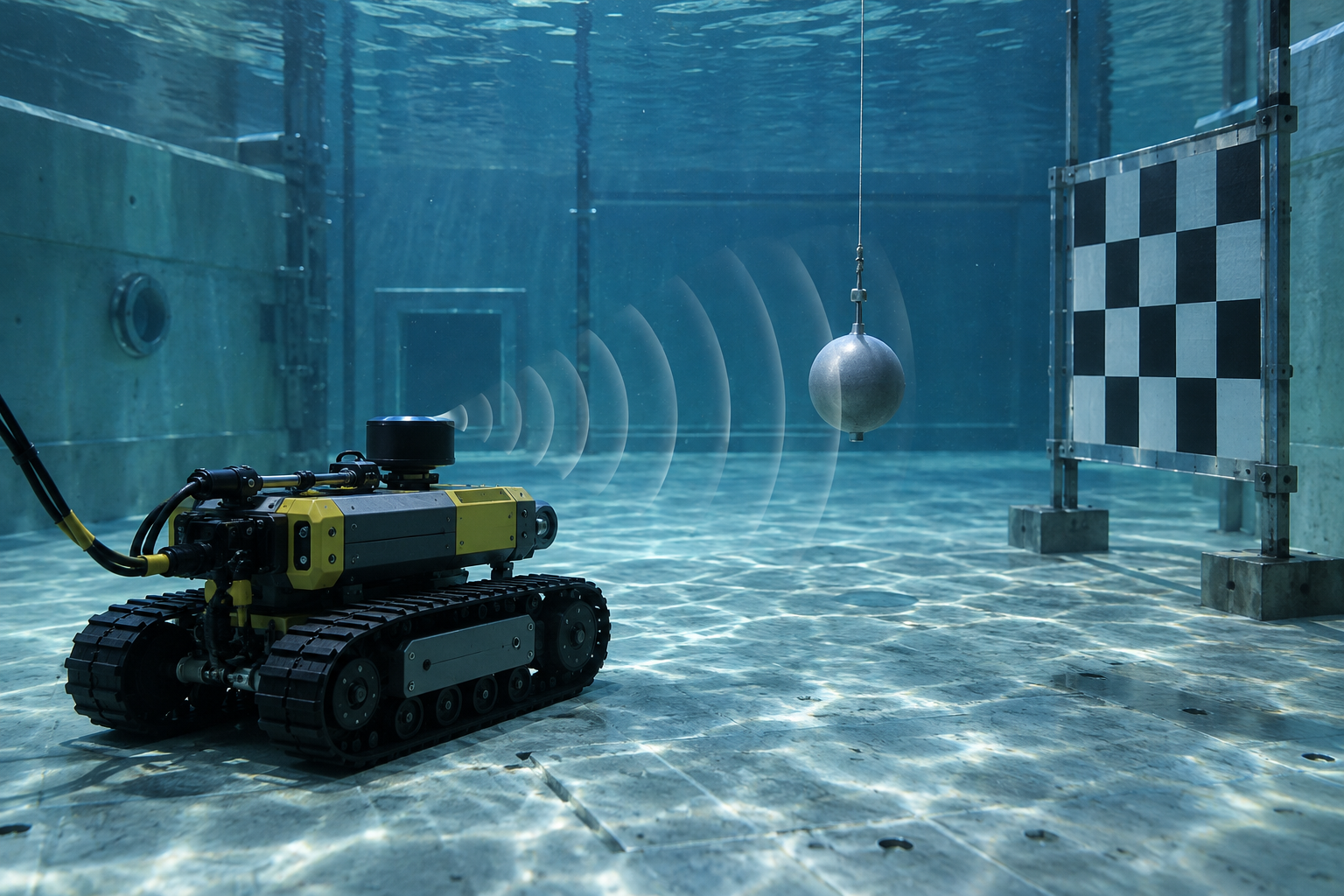
Bench tests, pressure tests, a clear-water tank, seeded gravel, turbidity trials, tether tests, and a supervised river pilot build the evidence ladder. Permits, wildlife rules, navigation requirements, and landowner permissions are part of the product—not paperwork after the fact.

Verification before river work

ROS 2 data plane

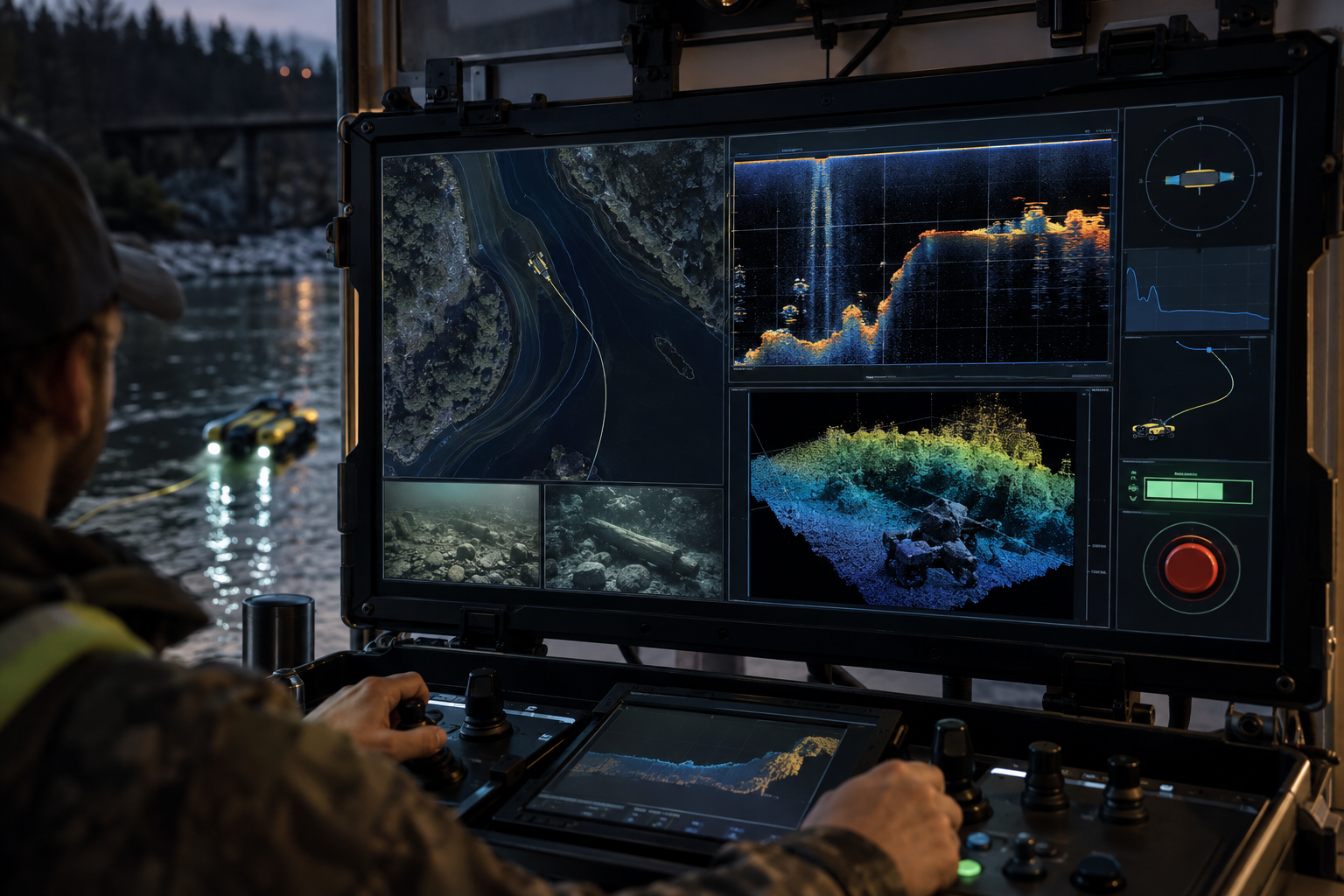
ROS 2 is a practical way to separate camera, sonar, LiDAR, PI, navigation, and sampler nodes while preserving timestamps and diagnostics. The edge computer can publish compressed operator previews and full-rate data to local storage, while a safety MCU owns motor current limits, leak response, emergency stop, and a hardwired recovery output. Time synchronization and dropped-message counters belong in the mission bundle.

Middleware
ROS 2 candidate
Safety boundary
Independent MCU / watchdog
Stored evidence
Raw streams + corrected products + diagnostics
Network
Gigabit internal link; tether bandwidth budgeted
ROS 2 data plane

Target-and-tag behavior

A lawnmower survey pattern is only the opening state. When a route cell contains a sonar trap shape, a repeatable PI waveform, or a camera anomaly, the planner can slow, increase light, take a macro pair, repeat the pass, and drop a virtual pin. The system returns to the planned route only when confidence, tether geometry, battery, and current are inside their limits.

  • Initial survey pass is passive and non-sampling.
  • Reactive observation adds evidence before disturbing the bed.
  • Abort always outranks a high model score.
Target-and-tag behavior