03 / SAMPLING

Probe, suction, and concentrate path

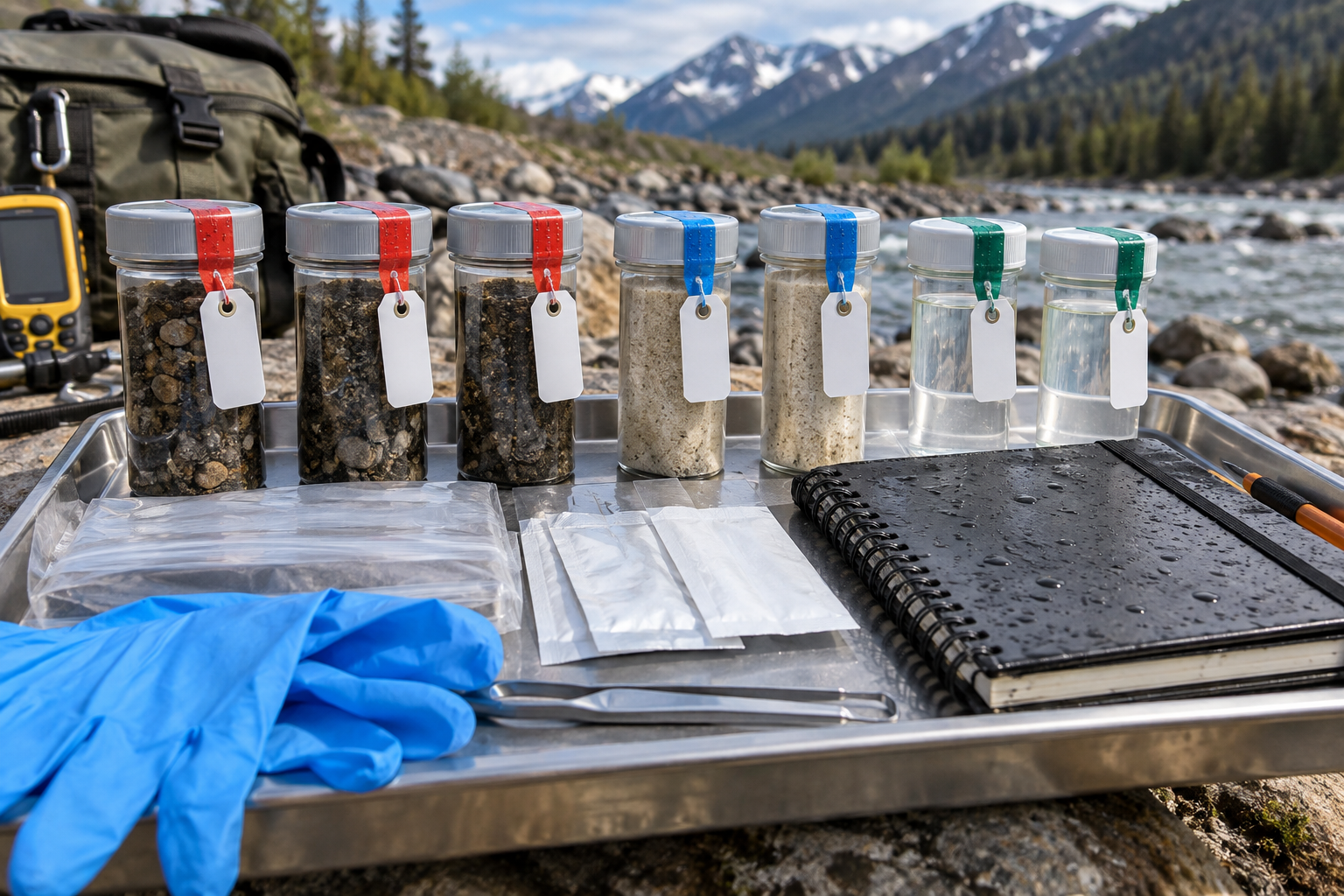
The sampler is deliberately conservative: disturb a small volume, retain a labeled fraction, and keep the physical evidence available for inspection.

GoldRiverBot concept illustration

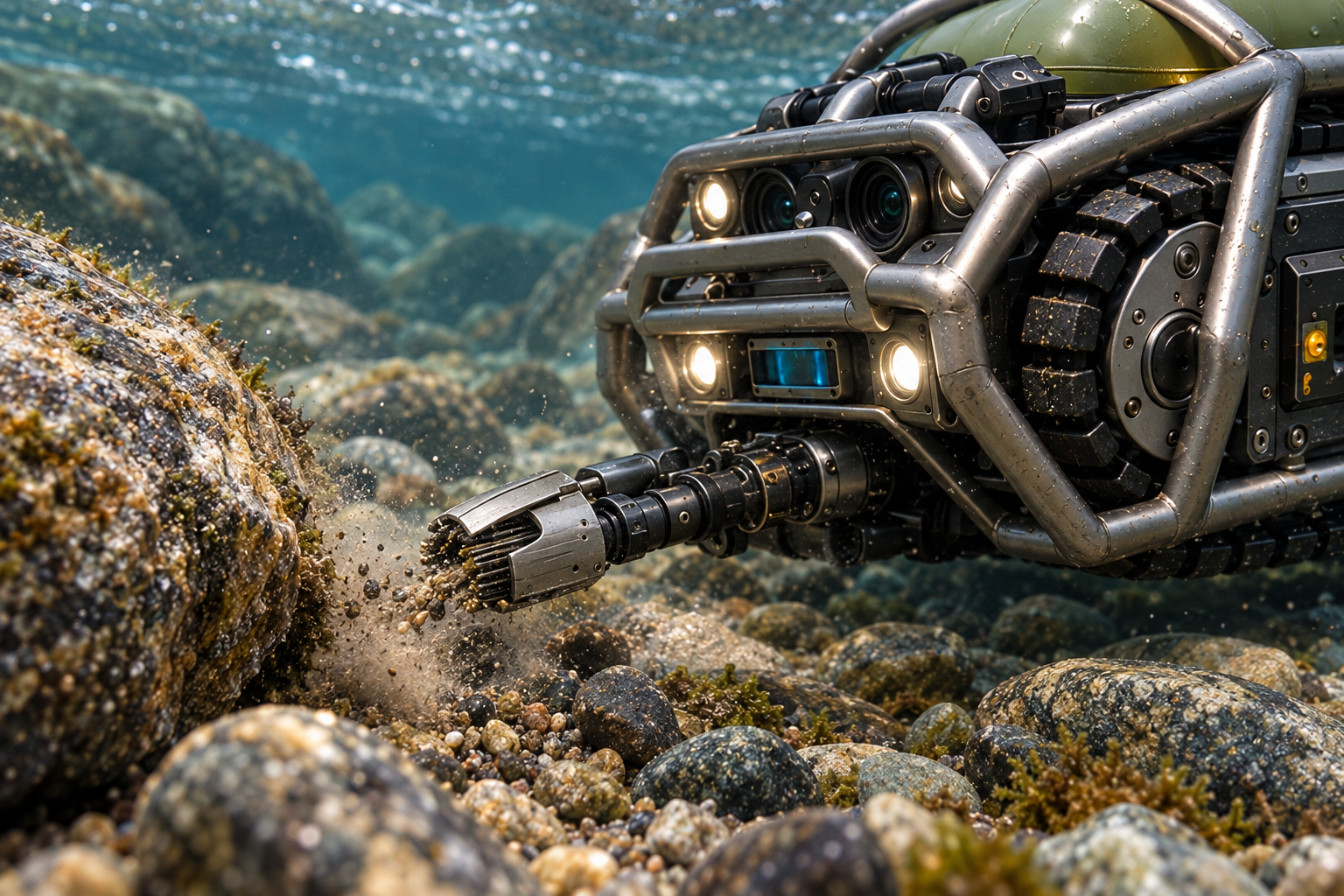
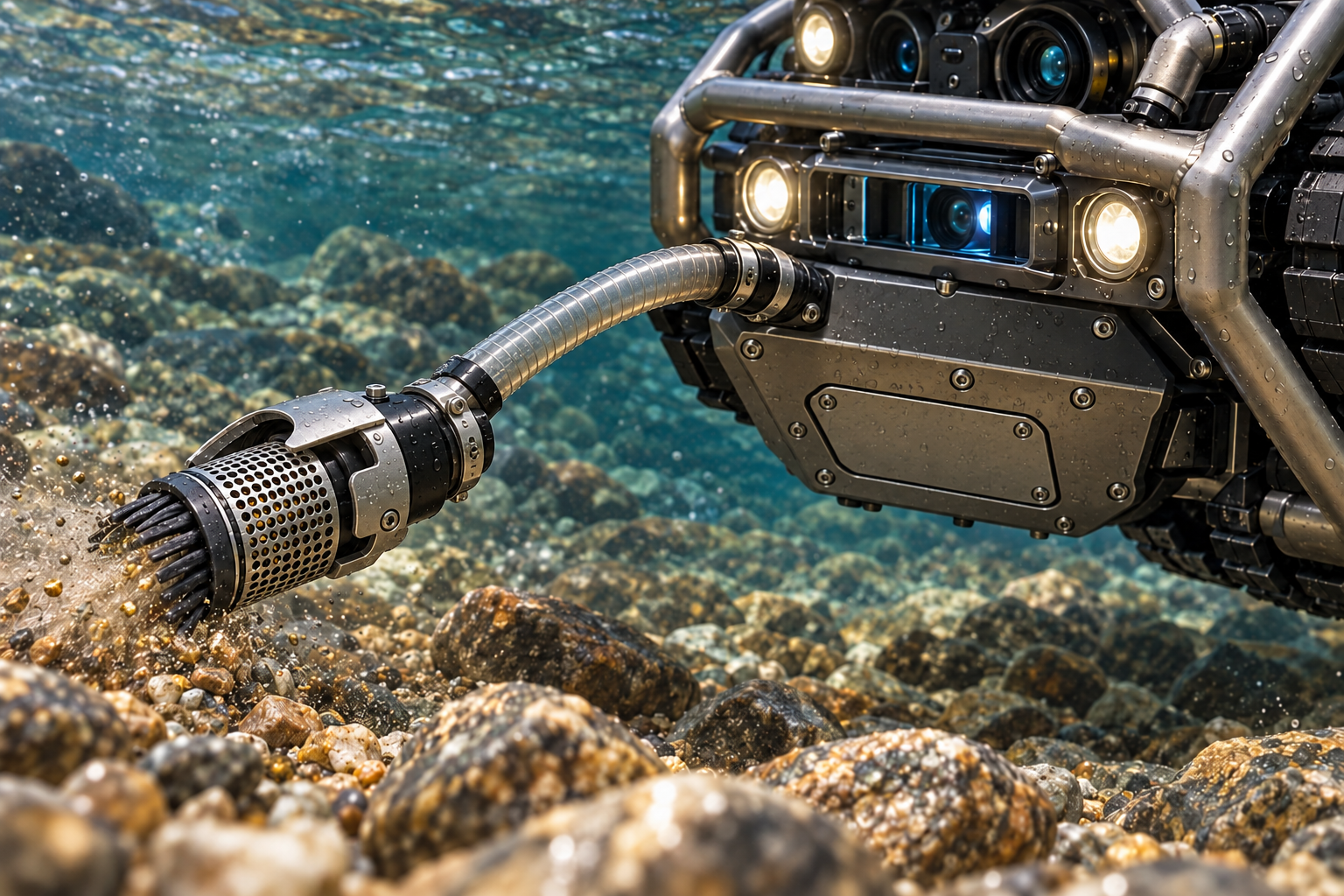
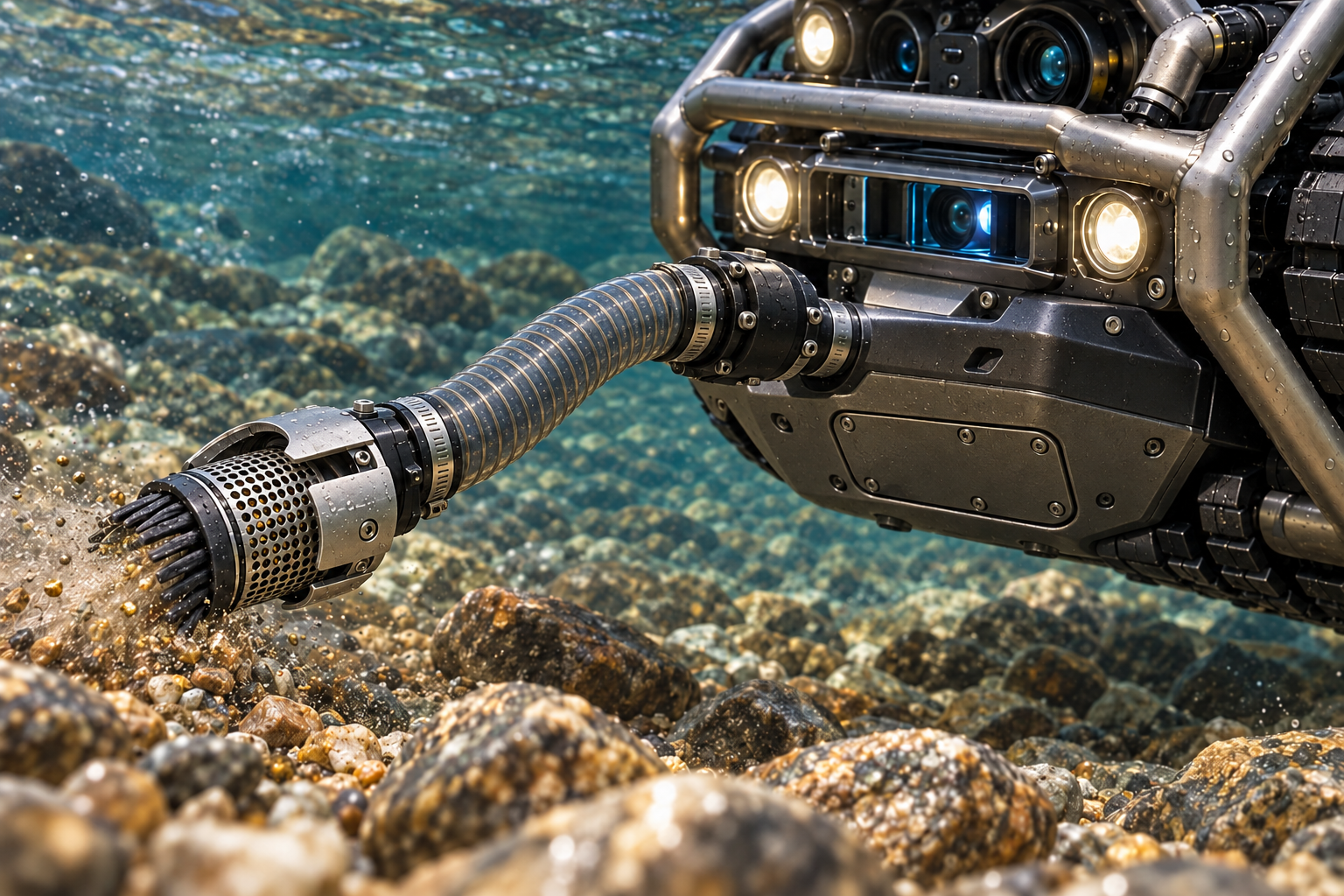
Vibrating probe and dredge mouth

A guarded brush nozzle at the end of the external arm loosens compacted gravel with controlled vibration while a flexible hose draws the slurry inward. The nozzle and hose contain no separation stage. Pressure and flow sensors detect a blocked mouth or an empty line before the pump overheats; screening and concentration happen inside the sealed belly chamber.

Screen concept
2–5 mm interchangeable first stage
Pump control
Current, pressure, and flow closed loop
Probe
Replaceable vibrating brush tip, duty-cycled
Sample record
GPS offset + time + depth + sensor trace
Vibrating probe and dredge mouth

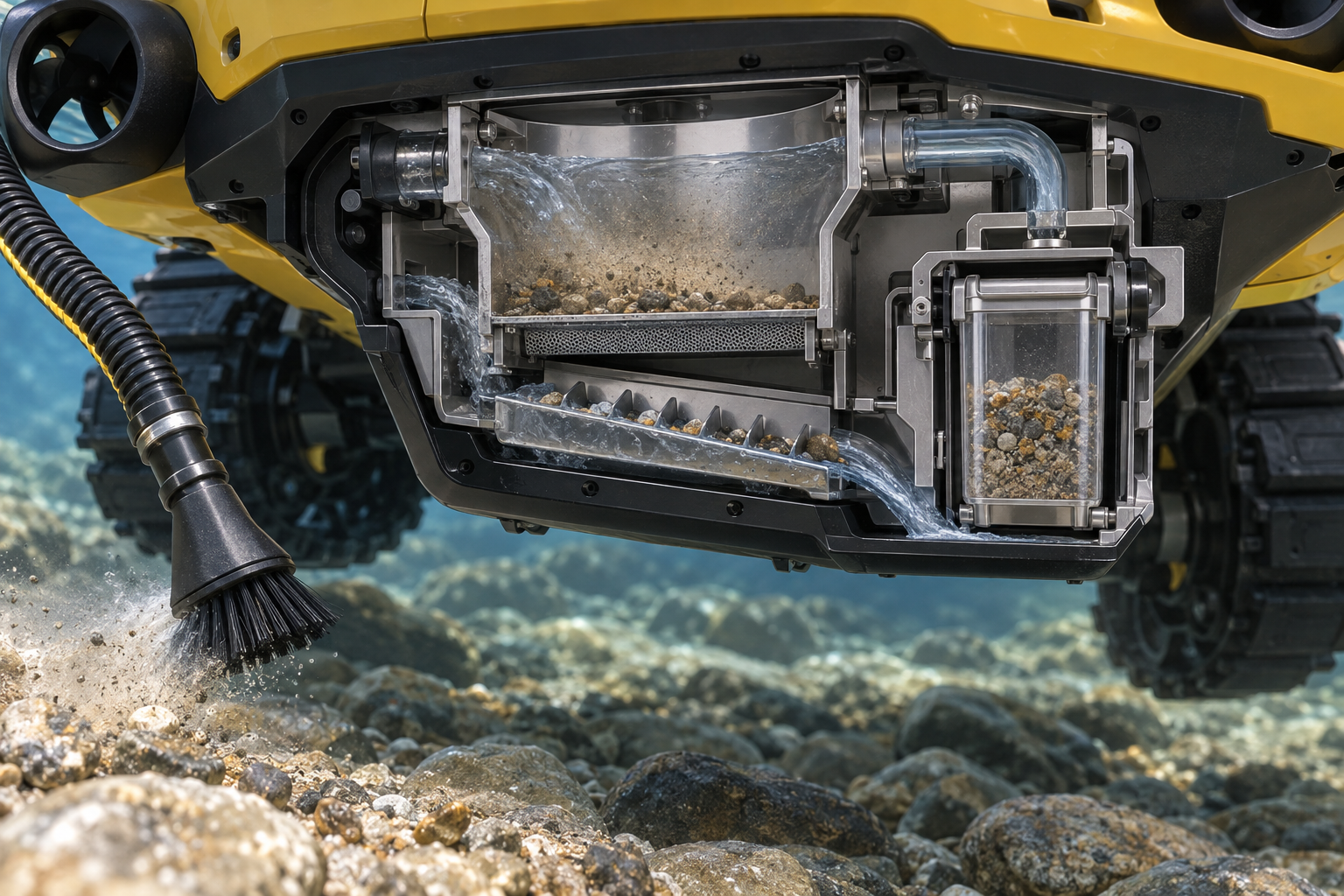
Internal separation

Inside the protected sample bay, a stepped settling chamber slows the slurry, a vibrating riffle tray concentrates dense particles, and a removable cartridge captures the retained fraction. A controlled rinse returns excess water while keeping the collection tray locked to the frame. The mechanism is a concept for prototyping; recovery efficiency must be measured against known seeded material.

  • Vibration separates by settling behavior, not by claiming elemental identity.
  • Screens and riffles are accessible after recovery.
  • Each cartridge can be sealed, photographed, weighed, and sent for assay.
Internal separation

AI vision is an assistant

A macro camera can classify particle shape, color, and reflectance as an experimental sorting aid. It cannot prove a flake is gold. Candidate fragments should be retained with the full image, lighting state, calibration target, and laboratory comparison. The strongest workflow combines a visual suggestion with density separation and ICP-MS or fire-assay confirmation.

Concept cartridge count
10–30 cartridges
Concept volume
10–50 mL each
Validation
Blanks, standards, duplicate samples, lab assay
AI vision is an assistant

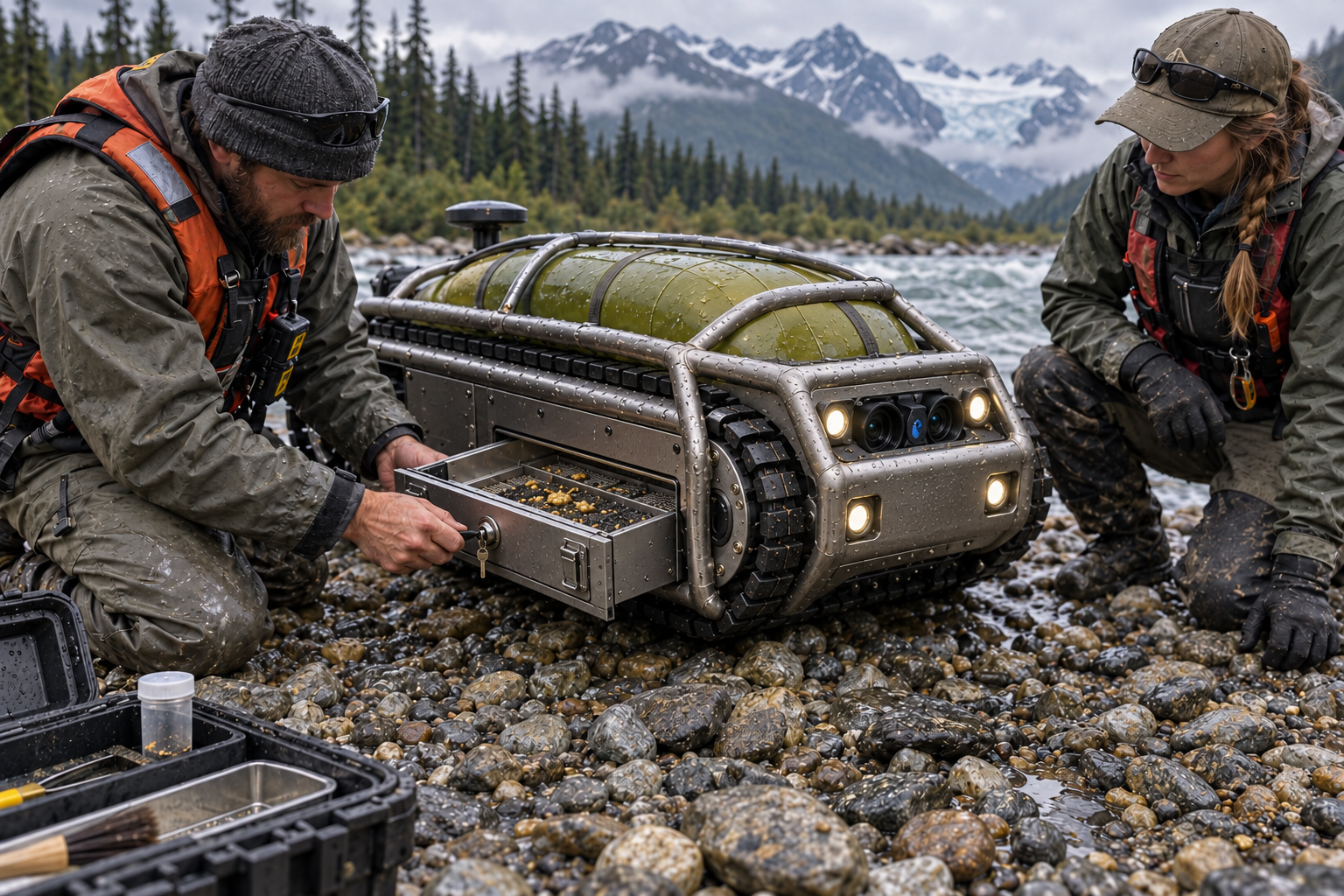
Field tray inspection

When the robot is recovered, the key-locked tray opens on shore. The operator photographs the seal, tray geometry, and concentrate before any hand sorting. This preserves chain of custody and makes a dramatic field moment without confusing a concept visualization for a verified discovery.

Field tray inspection

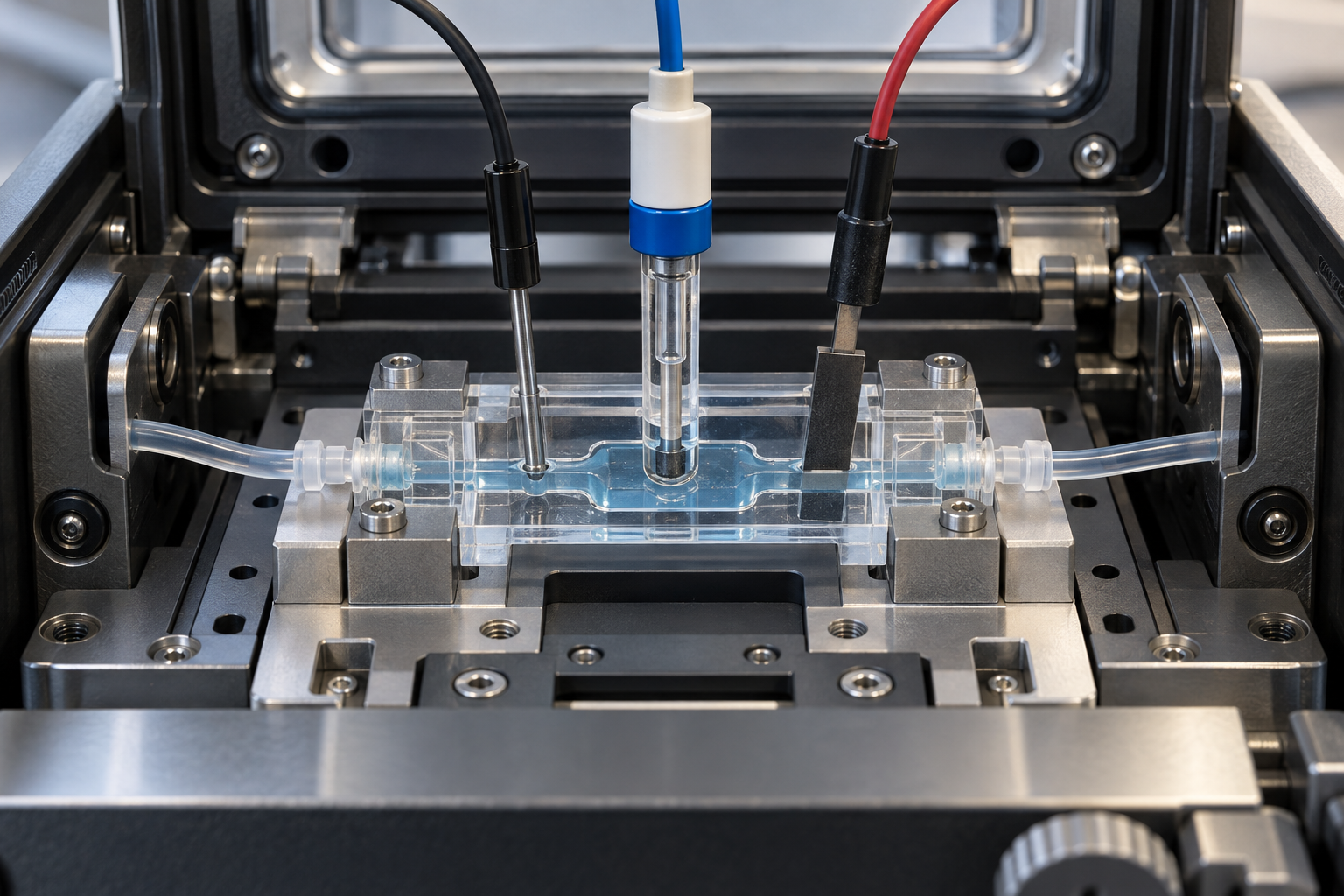
Two analysis paths

A small microfluidic three-electrode cell—an experimental ‘Bloodhound A’ path—could expose a controlled water sample to electrochemical measurements. It needs calibration solutions, blanks, temperature logging, and comparison against laboratory ICP-MS; it is not a field assay by itself. A ‘Bloodhound B’ optical path can photograph macro particles under repeatable lighting, but color and sparkle are not elemental identification. LIBS or XRF would introduce power, shielding, and safety requirements that belong in a later test article.

  • No mercury electrodes.
  • Retain duplicate samples for independent laboratory comparison.
  • Keep optical classifications explicitly provisional.
Two analysis paths

Concentrate handling and custody

The internal screen and riffle path should be removable without scattering material into the hull. A cartridge receives a mission ID, position estimate, depth, timestamp, sensor event IDs, and a seal photograph. A second retained fraction and a blank control make it possible to distinguish a real repeatable signal from contamination introduced by the machine, crew, or previous mission.

Proposed cartridges
10–30 per mission
Concept volume
10–50 mL each
Controls
Blank, duplicate, seeded recovery test
End point
Independent assay, not AI confidence
Concentrate handling and custody