05 / ENERGY

Energy, buoyancy, and recovery

The energy story is a measured budget, not a promise of perpetual motion. Drift, generation, compute, and sampling each get an explicit operating mode.

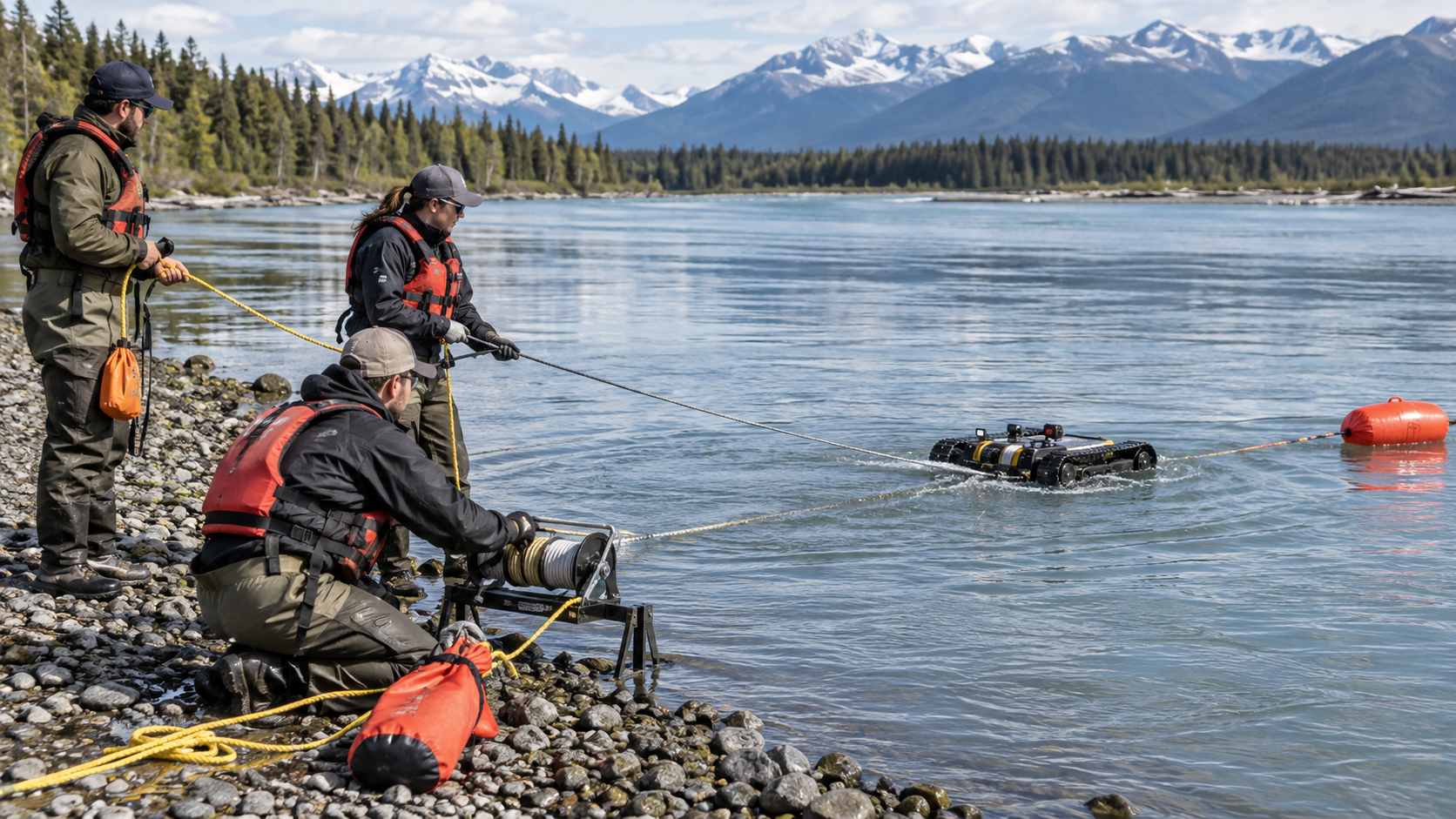
GoldRiverBot concept illustration

Battery and duty cycle

A 24 V LiFePO4 pack in the 20–40 Ah range is a candidate, or roughly 480–960 Wh before derating. At a measured 30 W average, 720 Wh is about 24 hours. Months of deployment requires long sleep periods and measured generation; it does not follow from the battery alone.

Candidate pack
24 V, 20–40 Ah LiFePO4
Nominal energy
480–960 Wh
Design rule
Measure average duty cycle, do not assume it
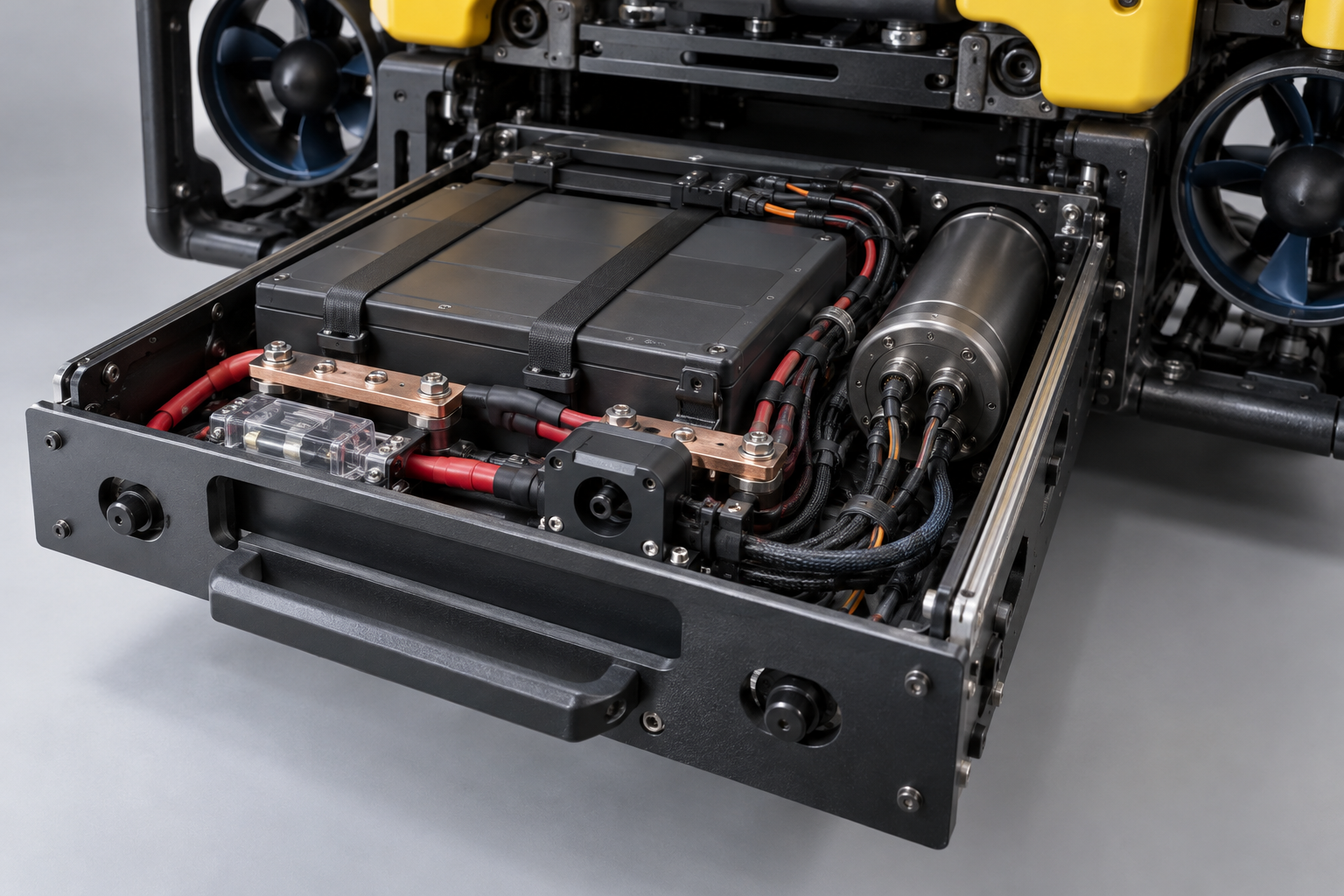
Battery and duty cycle

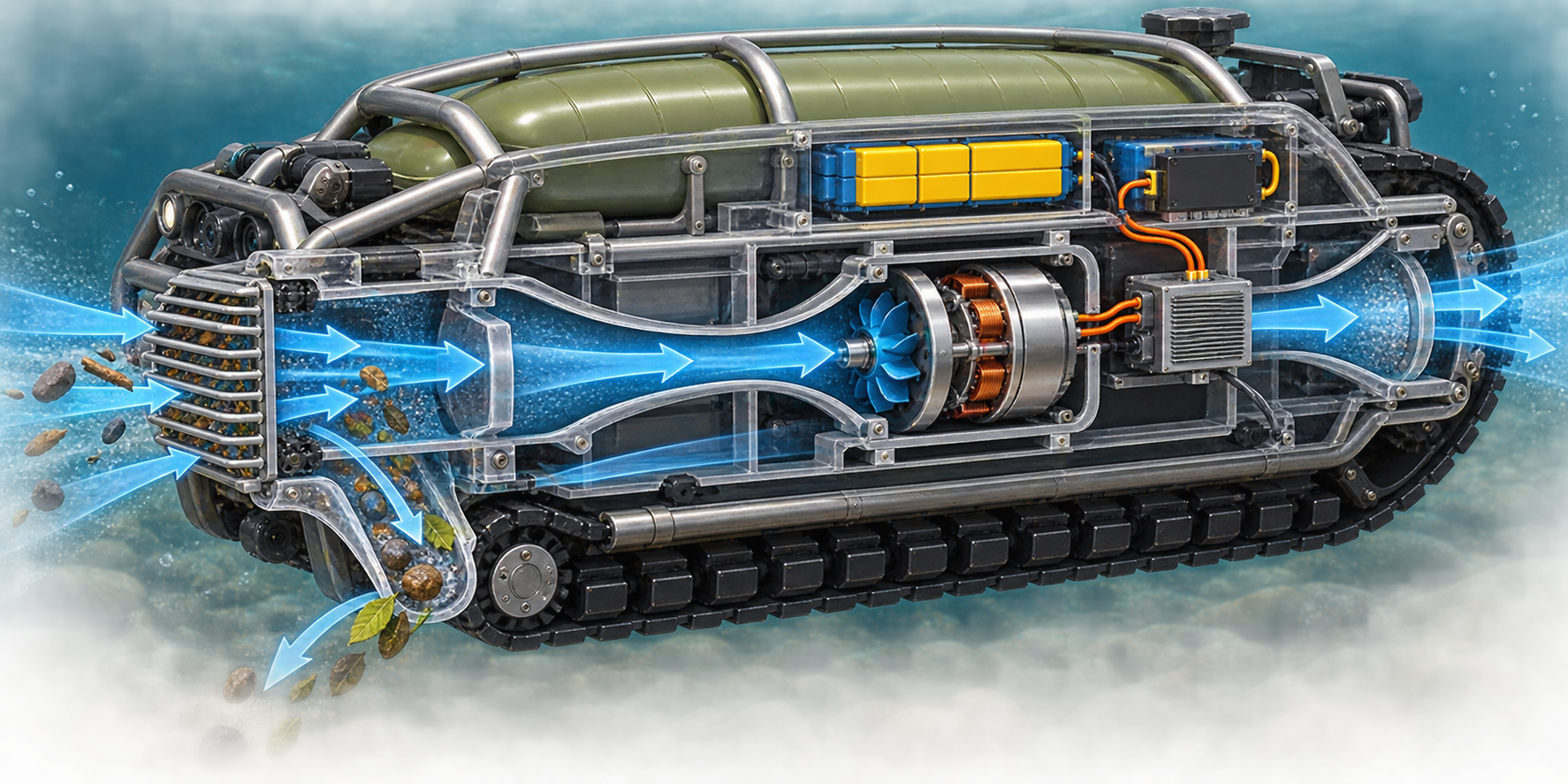
Venturi and current energy

The available flow power follows P = ½ρAv³. With 0.01 m² of effective area, 1 m/s is about 5 W incident and 2 m/s about 40 W before losses. A turbine can help hold position or recharge in current; while drifting at the same speed as the water, it has little relative flow to harvest.

  • Use an overspeed bypass and mechanical debris guard.
  • Log flow speed, generator torque, and battery state together.

Inflatable recovery cells

A closed-loop multi-cell bladder uses pressure sensors, a reservoir or compressor, and relief hardware. At approximately 3 m depth, absolute pressure is about 1.3 bar; roughly one liter of displaced water is about 2.2 lbf of lift. The controller can attempt a roll correction or jam release, but it must declare failure and use the tether when the geometry is unfavorable.

Inflatable recovery cells

Operating modes and thermal budget

The controller should expose measured modes rather than one optimistic endurance number: sleep, drift, survey, high-light inspection, sampling, and recovery. Jetson power, camera illumination, pump current, track torque, compressor duty, and generator output are logged separately. A thermal path from the compute pod to the pressure hull is required because convection inside a sealed housing is limited.

Example average load
30 W is a planning example, not a guarantee
High-load events
Pump, tracks, lights, compressor, GPU inference
Evidence
Voltage, current, temperature, duty-cycle histogram