01 / PLATFORM

Platform architecture

A compact, pressure-aware tracked crawler carries its own sensing, sampling, and recovery systems while a surface buoy preserves the geographic record.

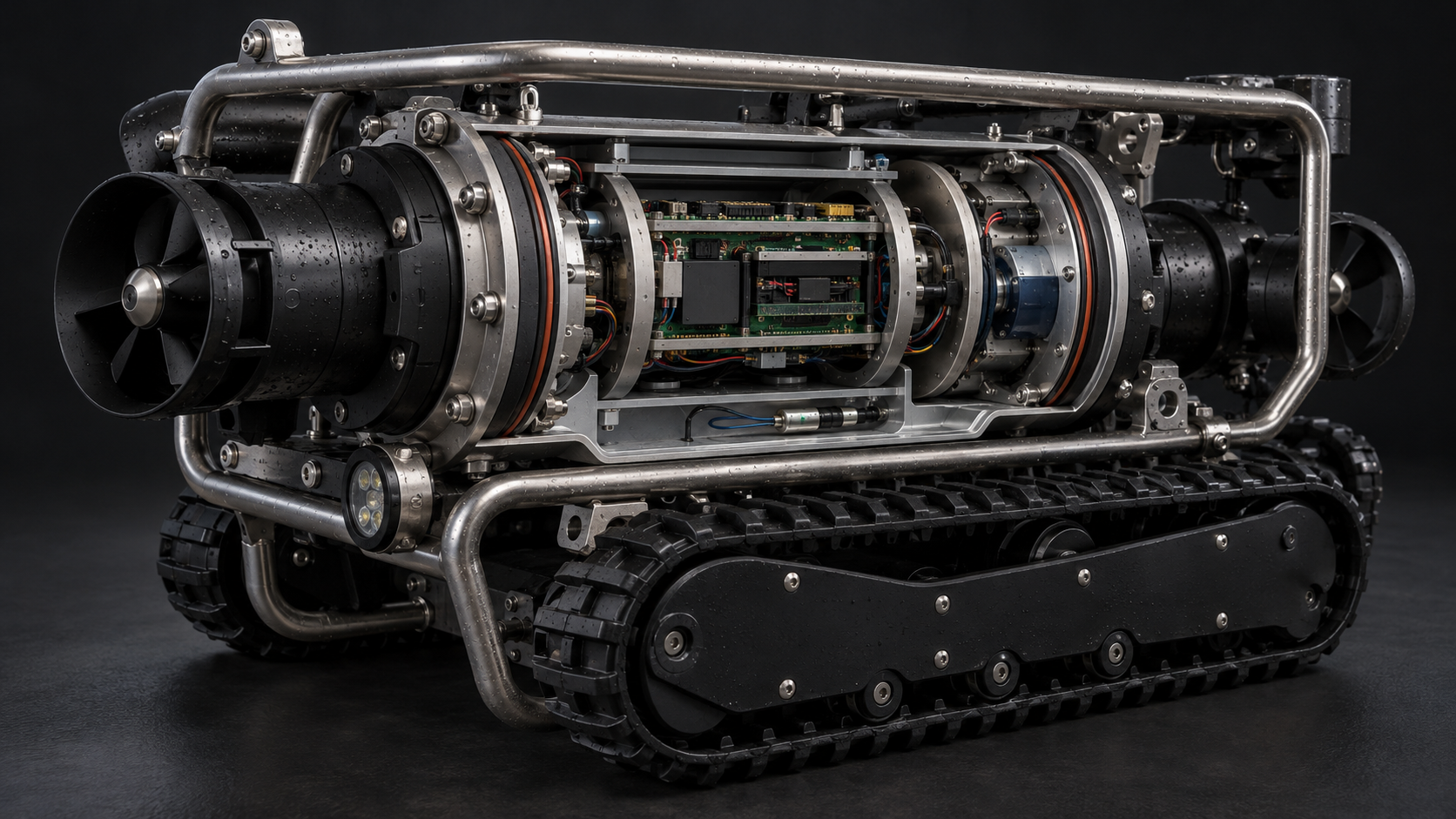
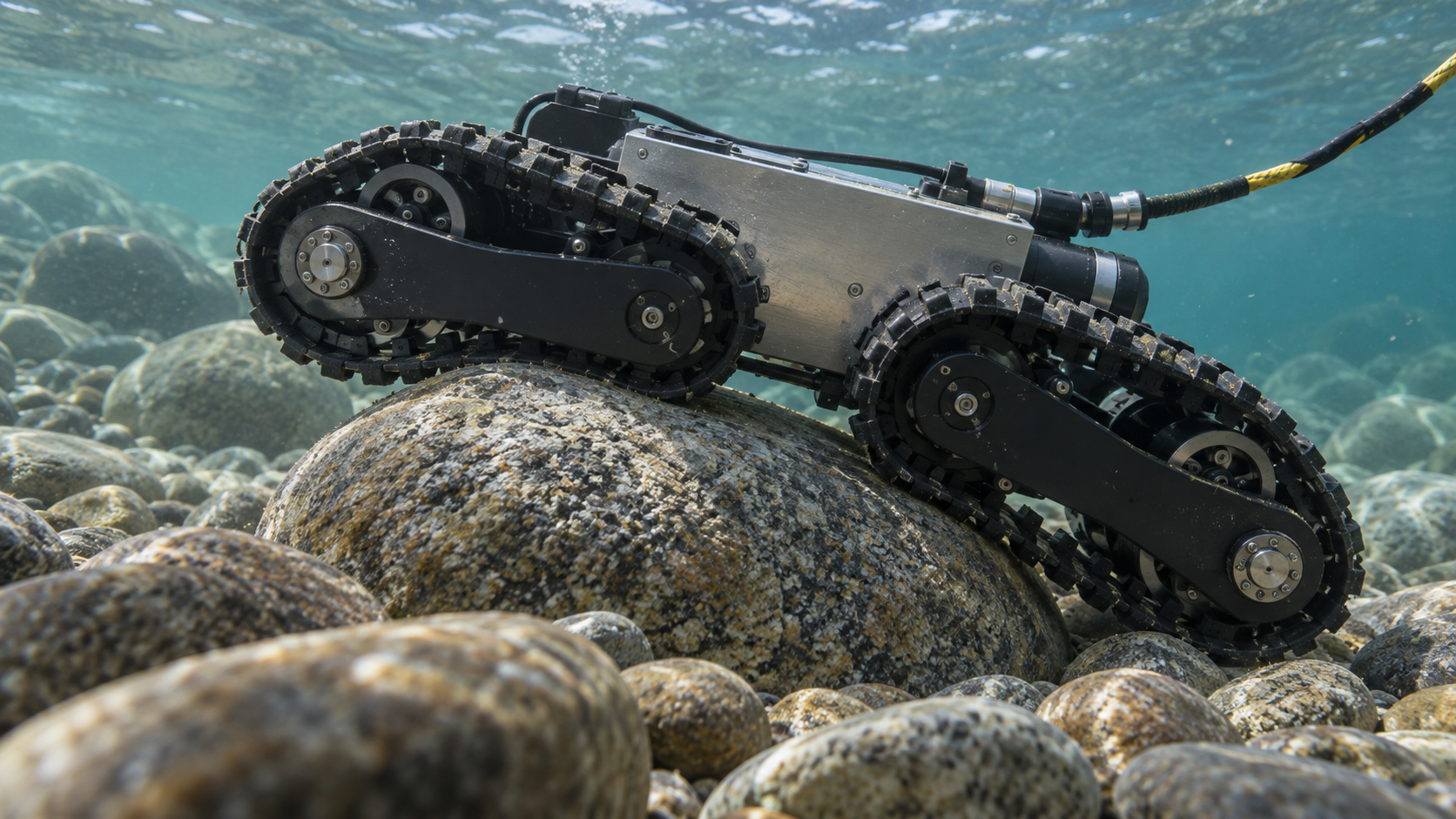
GoldRiverBot concept illustration

Mechanical envelope

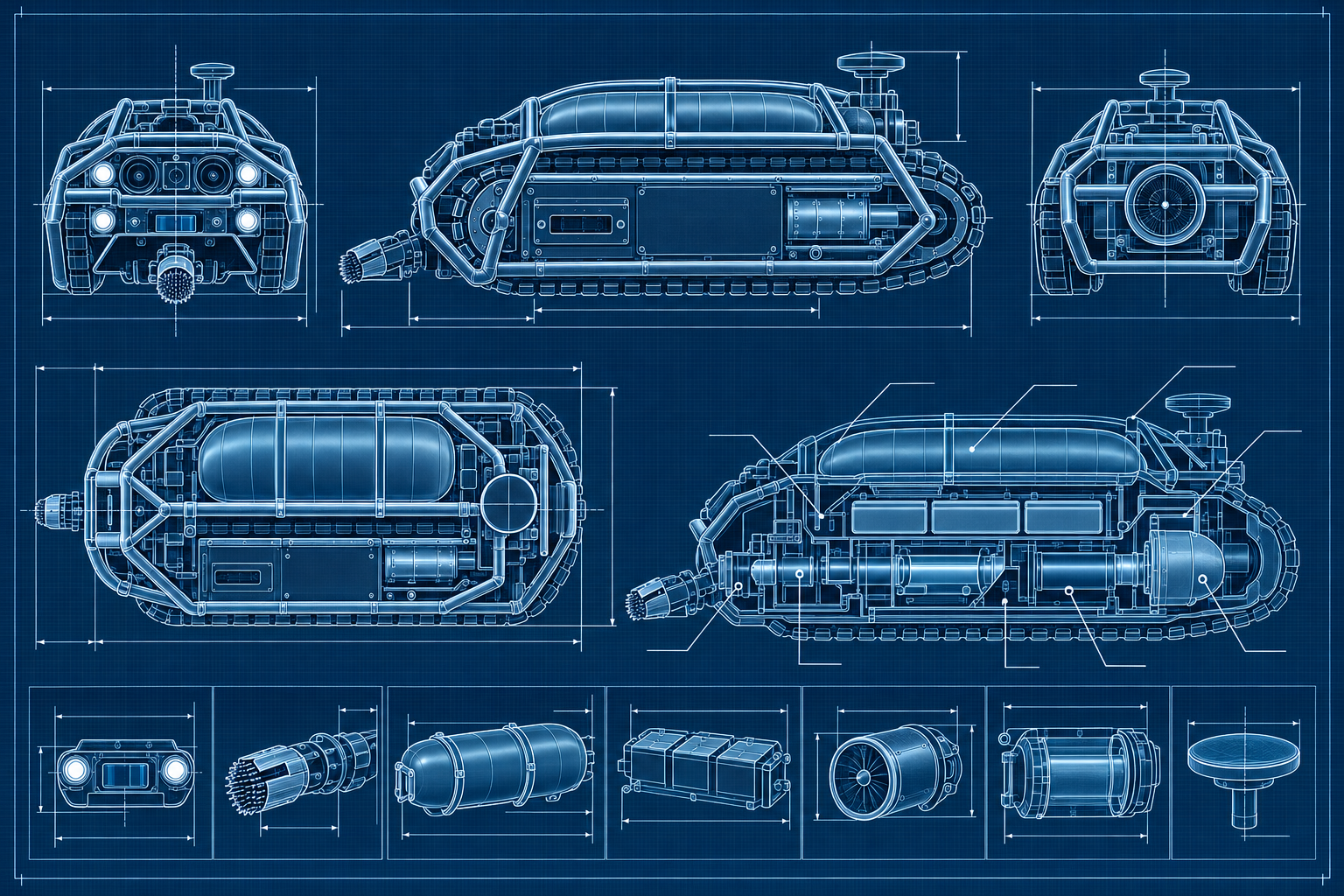
The preliminary envelope is approximately 36 × 12 × 12 inches. Twin sealed low-speed tracks provide differential steering and traction on the bottom; a rounded roll cage protects the pressure-rated central hull. O-rings, leak sensors, serviceable covers, and positive retrieval points are part of the safety case.

Nominal envelope
36 × 12 × 12 in
Drive
Twin sealed low-speed tracks
Hull
Pressure-rated central electronics bay
Recovery
Surface buoy, tether, hard points
Mechanical envelope

Current is transport, not propulsion

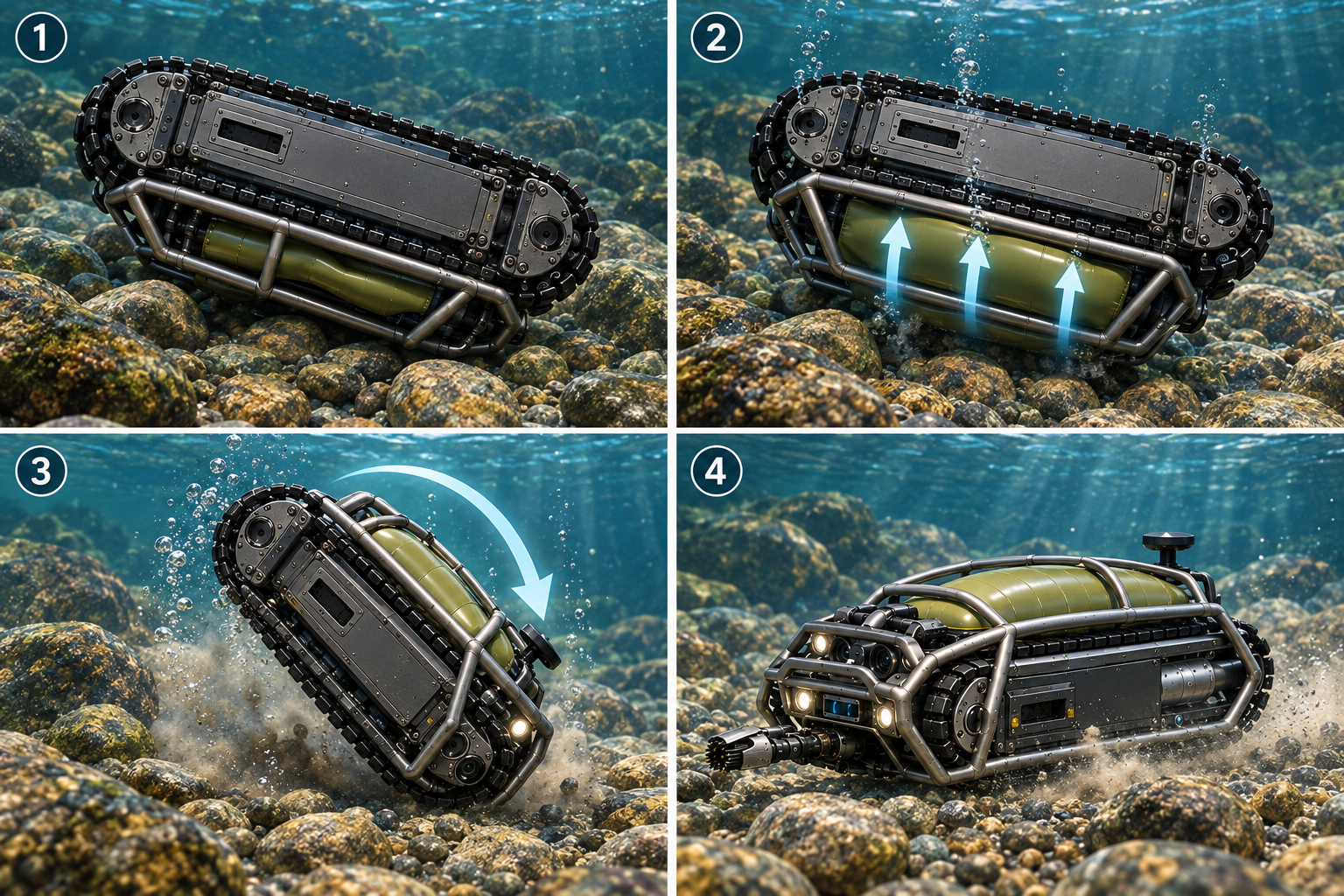
The concept does not assume swimming thrusters. When the robot is allowed to drift, the river carries it; when it must hold or steer, tracks contact the bed. Inflation is reserved for jam recovery, self-righting attempts, or a controlled downstream transfer.

  • A self-righting sequence is not guaranteed when wedged.
  • Track traction, tether loads, and bladder buoyancy require tank and river trials.
Current is transport, not propulsion

Serviceable modules

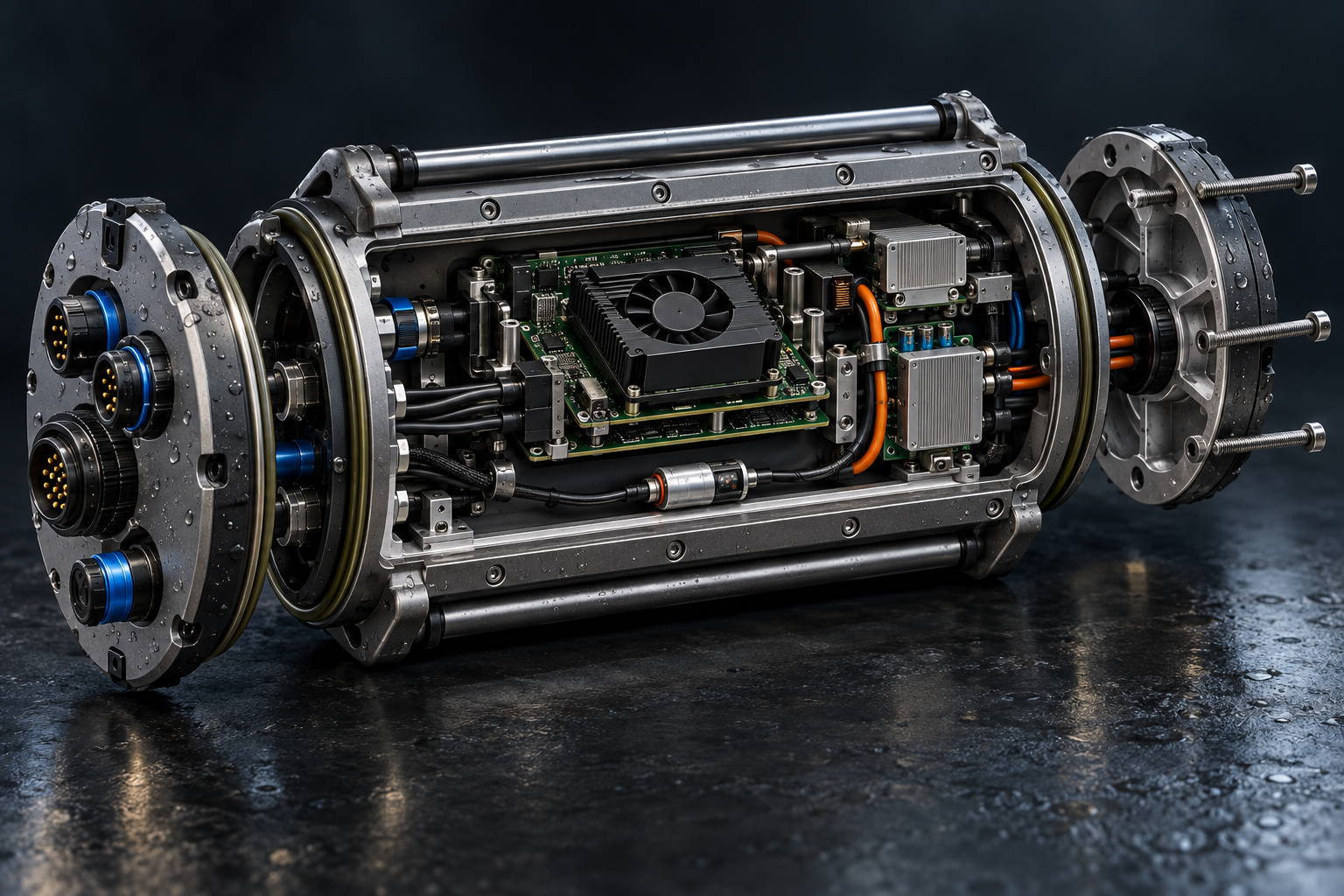
The pressure hull, compute pod, sensor mast, detector coil, sampler, and buoy are separate test targets. This makes a failed camera or clogged suction path diagnosable instead of turning the whole robot into a sealed black box.

Serviceable modules

Pressure boundary and connectors

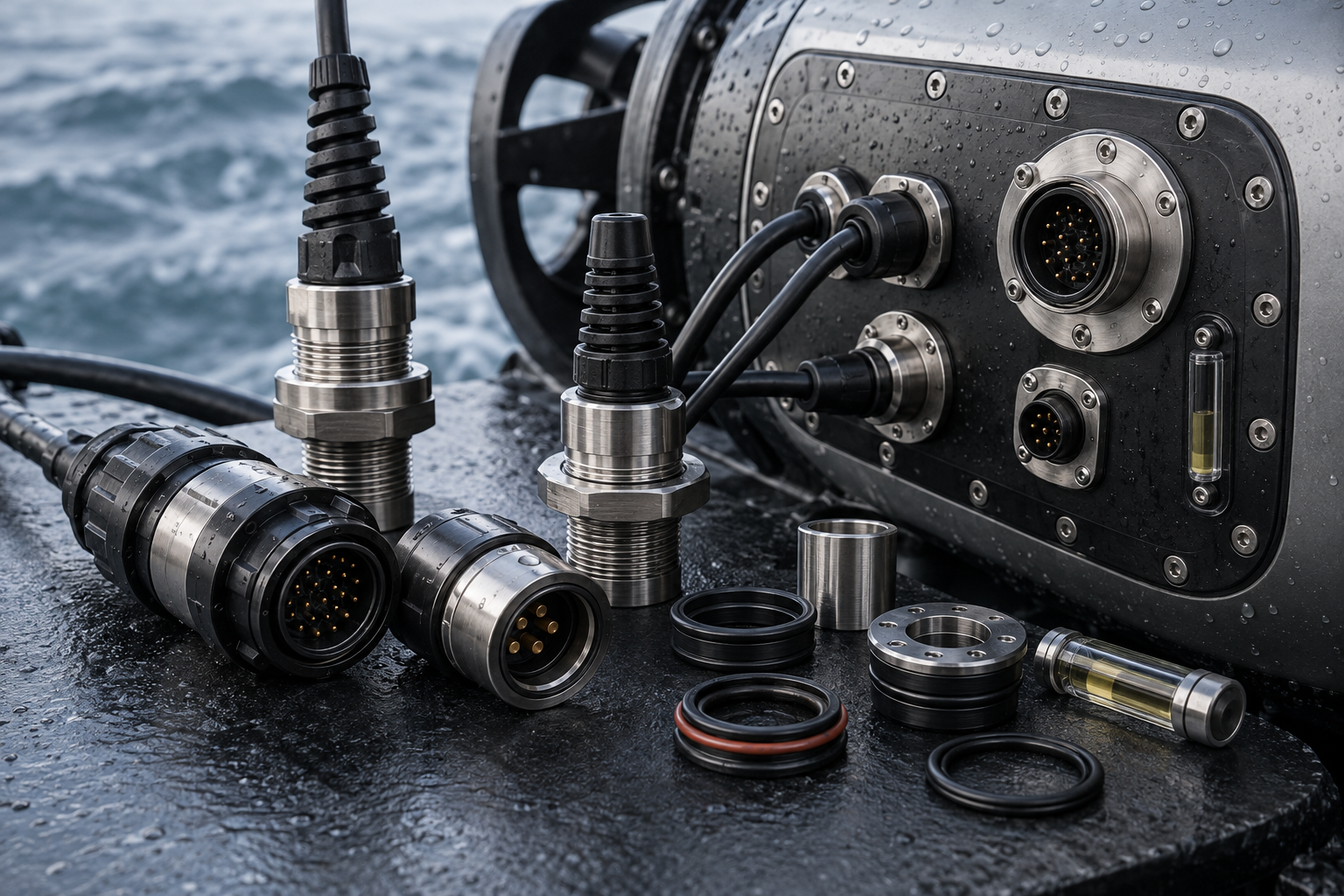
The central electronics cylinder should be treated as a pressure vessel with a defined depth rating, not merely a waterproof box. Radial O-rings, captive fasteners, cable penetrators, strain relief, and a sacrificial leak-detection channel create a testable boundary. Every opened service joint gets a recorded seal inspection and pressure test before the next mission.

Design gate
Pressure and vacuum test before wet test
Monitoring
Leak sensor + humidity witness + battery isolation
Service rule
No field reseal without documented inspection
Pressure boundary and connectors

Tracks, traction, and tether loads

Low-speed sealed tracks are sized for bottom contact, not high-speed swimming. Differential commands should be limited by motor current, slip estimation, and tether angle. A surface buoy and tether carry GNSS and recovery load; the crawler logs the offset between the buoy and the underwater body so a map point is never mistaken for centimeter-accurate GPS.

  • Measure track slip on cobble and sand.
  • Use current and tether load to decide when to abort.
  • Separate navigation uncertainty from sensor-detection confidence.
Tracks, traction, and tether loads